
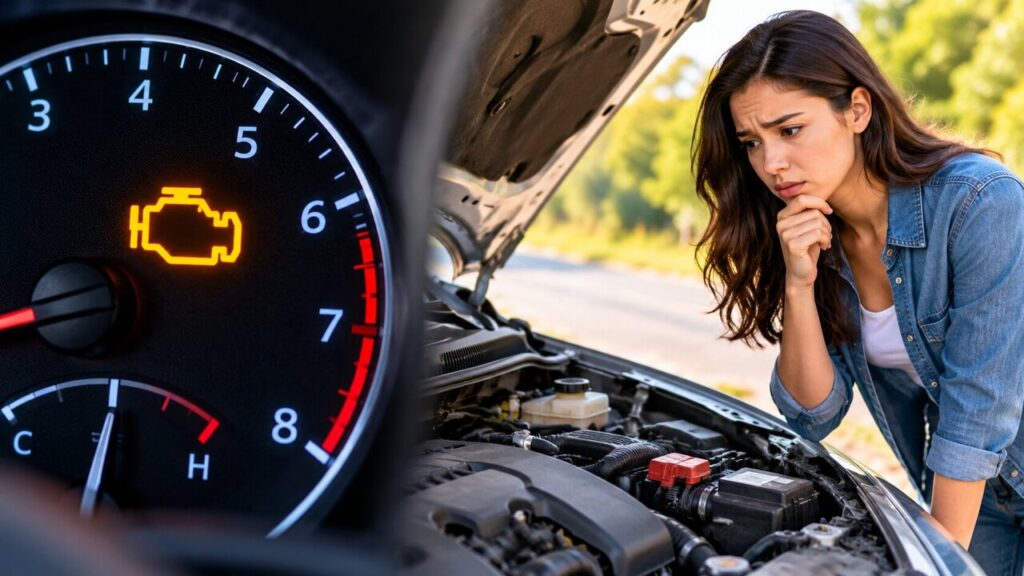
Seeing the check engine light illuminate on your dashboard can be worrying, especially when your car seems to be running normally. The engine sounds fine, acceleration feels unchanged, and there may be no unusual vibration or noise. So, is it safe to keep driving?
The answer depends on what triggered the warning. Your car’s check engine light is part of its onboard diagnostic system, which monitors engine performance, emissions, fuel delivery, and other related systems. A warning can indicate anything from a loose fuel cap to a problem with an ignition component or emissions sensor.
Even if your vehicle drives perfectly, you should not ignore the warning. Some problems begin with few noticeable symptoms but can become more expensive if left unresolved. Here is what you should check next.
1. Check Whether the Light Is Steady or Flashing
The first step is to observe how the check engine light behaves.
A steady check engine light usually indicates that the engine computer has detected a fault that needs investigation. If the car runs normally and no other warning signs appear, you may be able to drive a short distance to a repair shop, depending on the vehicle’s manual and circumstances.
A flashing check engine light is more urgent. It can indicate an active engine misfire that may damage the catalytic converter. If the light flashes while driving, reduce engine load, pull over safely, and switch off the engine. Arrange professional assistance rather than continuing your journey.
If the warning appears alongside overheating, severe shaking, loss of power, unusual smoke, or an oil-pressure warning, stop as soon as it is safe. Do not assume that normal driving means the engine is healthy.
2. Check the Fuel Cap
A loose or damaged fuel cap is one of the simplest possible causes of a check engine warning on vehicles equipped with a conventional fuel cap.
Modern vehicles monitor the evaporative emissions system, which helps prevent fuel vapours from escaping into the atmosphere. If the cap is not tightened correctly or its seal is damaged, the system may detect a leak.
If you recently refuelled, park safely and check whether the cap is properly secured. Tighten it according to the manufacturer’s instructions and inspect the seal for visible damage.
The warning may not disappear immediately. Depending on the vehicle, the system may need several successful driving cycles before the light turns off. If it remains illuminated, have the diagnostic trouble codes checked instead of repeatedly tightening the cap.
Some vehicles use capless fuel-filler systems, so follow the owner’s manual rather than looking for a traditional cap.
3. Scan the Car for Diagnostic Trouble Codes
One of the most useful next steps is to read the vehicle’s diagnostic trouble codes using an OBD-II scanner, where supported.
A mechanic or an automotive parts shop may be able to scan the system, or you can use a compatible scanner yourself. The codes help identify which system detected a problem.
For example, codes may relate to:
- Oxygen or air-fuel ratio sensors
- Engine misfires
- Evaporative emissions leaks
- Mass airflow sensors
- Catalytic converter efficiency
- Fuel mixture problems
Remember that a code does not automatically prove that the named component has failed. A code pointing to an oxygen sensor, for instance, can sometimes be caused by an exhaust leak or another problem affecting the air-fuel mixture.
Record the exact codes and any available freeze-frame information before clearing anything. This information can help a technician identify the underlying cause.
4. Consider a Faulty Oxygen Sensor
An oxygen sensor measures the amount of oxygen in the exhaust, helping the engine computer adjust the air-fuel mixture and monitor emissions.
If the sensor becomes faulty or its wiring is damaged, the check engine light may come on even when the car still feels normal. Possible longer-term effects include reduced fuel economy, increased emissions, or poor engine performance.
However, replacing the sensor immediately is not always the correct solution. Exhaust leaks, wiring problems, or other engine faults can produce similar diagnostic results.
A proper diagnosis can determine whether the sensor itself needs replacement.
5. Look for Air Intake or Vacuum Leaks
Your engine needs the correct balance of air and fuel to run efficiently. A damaged intake hose, loose connection, or vacuum leak can allow extra air into the engine.
Small leaks may not cause obvious driving problems at first. Larger leaks can lead to rough idling, hesitation, increased fuel consumption, or a lean air-fuel mixture.
With the engine switched off and cool, you can visually inspect accessible intake hoses for obvious cracks or disconnected fittings. Avoid reaching near hot or moving engine components.
If no visible issue appears, a technician can use appropriate diagnostic tests, such as a smoke test, to find leaks that are difficult to see.
6. Check for Ignition or Fuel-System Problems
Spark plugs, ignition coils, fuel injectors, and related components help the engine run smoothly. An early-stage fault may trigger a warning before the driver notices a significant change.
Possible symptoms include occasional hesitation, reduced acceleration, rough idling, or increased fuel consumption. Sometimes, however, the warning appears before these symptoms become noticeable.
If the light is flashing or the engine begins shaking, avoid continuing to drive. An unresolved misfire can cause expensive damage to the catalytic converter.
A mechanic can examine the stored codes, misfire data, and relevant components to determine what needs attention.
7. Don’t Ignore an Emissions-System Warning
The check engine light frequently relates to emissions-control equipment. This may include the evaporative emissions system, catalytic converter, exhaust sensors, or other components that help reduce pollution.
A fault in these systems may not immediately affect how the car drives, but it can increase emissions and eventually affect performance.
If your vehicle fails an emissions inspection or has an emissions-related warning, arrange diagnosis promptly. Replacing expensive components without confirming the cause can waste money.
8. Should You Keep Driving?
Use the following guidelines to decide what to do:
- Steady light, normal driving: Check the owner’s manual, arrange a diagnostic scan soon, and avoid unnecessary long trips until the cause is known.
- Flashing light: Reduce load, stop safely, switch off the engine, and seek professional assistance.
- Warning with overheating, severe shaking, smoke, or loss of power: Stop driving as soon as it is safe and arrange recovery if necessary.
- Light disappears on its own: Do not assume the problem is permanently fixed. Stored codes may still help identify an intermittent fault.
Never disconnect the battery or clear diagnostic codes simply to hide the warning before a proper diagnosis. Doing so may erase useful information and will not repair the underlying problem.
Final Thoughts
If your check engine light comes on but the car still drives fine, there is no need to panic—but you should take the warning seriously. Start by checking whether the light is steady or flashing, inspect the fuel cap if applicable, and arrange an OBD-II diagnostic scan.
A loose cap or minor sensor issue may be relatively inexpensive to resolve, while ignition, fuel, or emissions-system faults may require more detailed repairs. The diagnostic code is a starting point, not a final diagnosis.
The safest approach is to investigate the warning early rather than wait for noticeable symptoms. Acting promptly can help prevent avoidable damage, improve fuel efficiency, and keep your vehicle reliable.
