
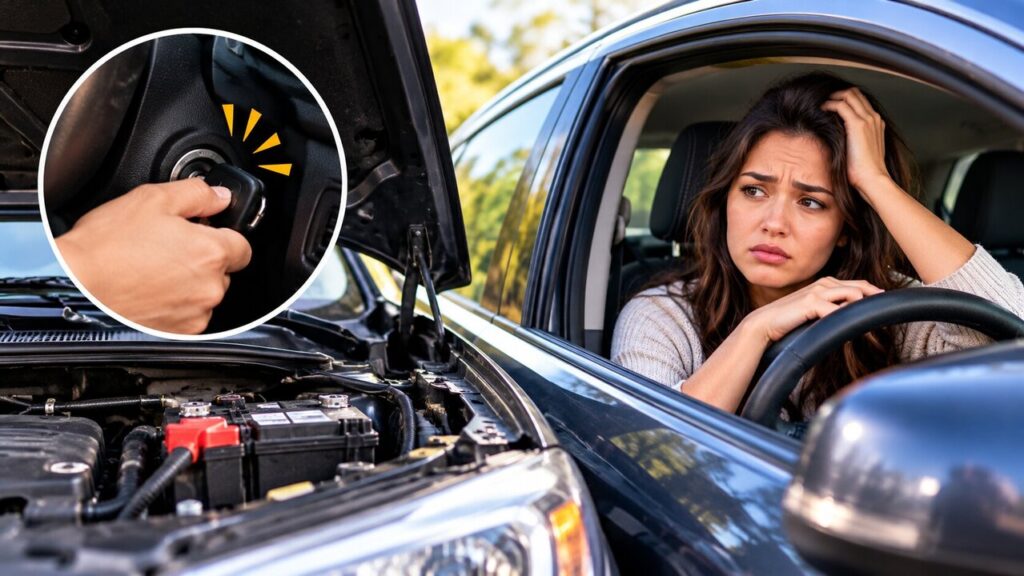
You turn the key or press the start button, expecting the engine to roar to life, but instead, you hear a clicking sound. The dashboard lights may come on, the radio might work, and the headlights may appear normal, yet the engine refuses to start. This situation can be frustrating, especially when your car was running perfectly the last time you drove it.
The good news is that a clicking sound often provides useful clues about what is preventing the engine from starting. Common causes include a weak battery, corroded battery terminals, a faulty starter motor, or an electrical connection problem. Identifying whether you hear one click or repeated rapid clicks can help narrow down the possibilities.
Here is what you should check before deciding whether your car needs a jump-start, a repair, or professional assistance.
1. Listen Carefully to the Clicking Sound
The first step is to determine what kind of clicking noise your car makes when you attempt to start it.
Rapid clicking: If you hear several quick clicks in succession, the battery may not have enough power to operate the starter motor. The starter solenoid may repeatedly engage and disengage as the voltage drops.
One loud click: A single click may indicate a faulty starter motor, a problem with the starter solenoid, a weak battery, or a poor electrical connection. It does not automatically mean the starter needs replacement.
No clicking at all: If nothing happens when you try to start the vehicle, the issue could involve a completely discharged battery, a faulty ignition switch, a starter relay, a safety interlock, or another electrical fault.
Pay attention to whether the dashboard lights dim when you attempt to start the engine. This observation can help a mechanic distinguish a low-voltage problem from other possible causes.
2. Check the Battery First
A weak or discharged battery is one of the most common reasons a car clicks but will not start. Starting the engine requires considerably more electrical power than operating the radio or dashboard lights.
Your battery may be weak because you left the headlights on, the car sat unused for several days, or the battery has reached the end of its service life. Cold weather can also reduce battery performance, although battery problems can occur in warm climates too.
Look for warning signs such as dim headlights, slow electrical accessories, or dashboard lights that flicker when you attempt to start the car.
If the battery is accessible, inspect it for visible damage or swelling. Do not attempt to jump-start a damaged, leaking, or frozen battery. Follow the vehicle manufacturer’s instructions before using jumper cables or a jump starter.
A safe, correctly performed jump-start may help if the battery is discharged. If the car starts afterward, have the battery and charging system tested to determine why the battery lost power.
3. Inspect the Battery Terminals and Connections
Even a healthy battery cannot deliver sufficient current if its electrical connections are loose or corroded.
Battery terminals may develop white, blue, or greenish deposits that interfere with electrical contact. Loose clamps or damaged cables can produce similar symptoms, including clicking noises, intermittent starting, and flickering dashboard lights.
With the engine switched off and the vehicle secured, visually inspect accessible battery connections. Do not touch exposed electrical conductors or attempt repairs if you are unsure how to work safely around the battery.
If a terminal appears loose or heavily corroded, have it cleaned and secured correctly. Avoid allowing metal tools to bridge the battery terminals, as this can cause dangerous sparks or burns.
A technician can also test voltage drop across the battery cables to identify resistance that may not be obvious during a visual inspection.
4. Consider a Faulty Starter Motor
If the battery is sufficiently charged and the connections are sound, the starter motor may be responsible.
The starter motor turns the engine so combustion can begin. When you turn the key or press the start button, the starter solenoid helps engage the starting mechanism.
A worn starter motor, faulty solenoid, damaged internal contacts, or wiring problem can prevent the engine from cranking. A single click without engine movement may point toward this area, although battery and cable problems can cause similar symptoms.
Starter problems can develop gradually. You might notice occasional starting difficulties before the vehicle eventually refuses to start altogether.
A mechanic can test the starter circuit and confirm whether the motor receives the correct electrical power. Replacing the starter without performing these checks may lead to unnecessary expenses.
5. Check the Alternator and Charging System
Sometimes, the battery is not the original problem. A failing alternator may be unable to recharge the battery while the engine runs.
If the charging system is not working properly, the battery can gradually lose power until it no longer has enough energy to start the car.
Possible clues include a battery warning light, headlights that become unusually dim, electrical accessories behaving erratically, or repeated battery failures.
A jump-start may get the vehicle running temporarily, but it will not fix a faulty alternator. If the charging system is failing, the car may stop running again after the available battery power is depleted.
Have a technician test the battery, alternator, and charging circuit together rather than replacing the battery automatically.
6. Rule Out Gear Selector and Safety Switch Problems
Not every clicking sound comes from a failed battery or starter motor. Some vehicles prevent starting unless specific safety conditions are met.
For an automatic transmission, confirm that the gear selector is in Park. If the vehicle does not start, try Neutral only if the owner’s manual permits it and the vehicle is securely stationary with the parking brake applied.
Manual-transmission vehicles may require the clutch pedal to be fully depressed. A faulty clutch safety switch or transmission range sensor can interrupt the starting circuit.
Push-button vehicles may also have key-fob battery or recognition problems. Follow the owner’s manual for the emergency starting procedure if the vehicle does not recognize the key.
These checks are worth trying before assuming an expensive component has failed.
7. When Should You Call a Mechanic?
If the car continues clicking after you have checked the basic conditions, professional diagnosis is the next sensible step.
Seek assistance if the battery is damaged, the cables become unusually hot, you notice a burning smell, or the vehicle repeatedly fails to start. Do not continue making repeated starting attempts, as this can drain the battery further and potentially overheat electrical components.
A technician can perform a battery load test, inspect cable connections, check starter current draw, and examine relevant fuses, relays, and safety switches.
These tests help identify the actual fault before you spend money on replacement parts.
Final Thoughts
If your car makes a clicking sound but will not start, begin by listening carefully to the noise and checking the battery condition. Rapid clicking often suggests insufficient voltage, while a single click can point toward a starter or electrical connection problem. However, neither sound proves a particular component has failed.
Check the gear selector and follow your vehicle’s starting instructions. If the battery appears healthy but the engine still refuses to crank, have the starter and electrical system tested.
The key is to diagnose the cause before replacing parts. A simple connection problem may be inexpensive to fix, while a failing starter or charging system may require professional repair. Acting early can help you avoid repeated breakdowns and unnecessary repair costs.
