
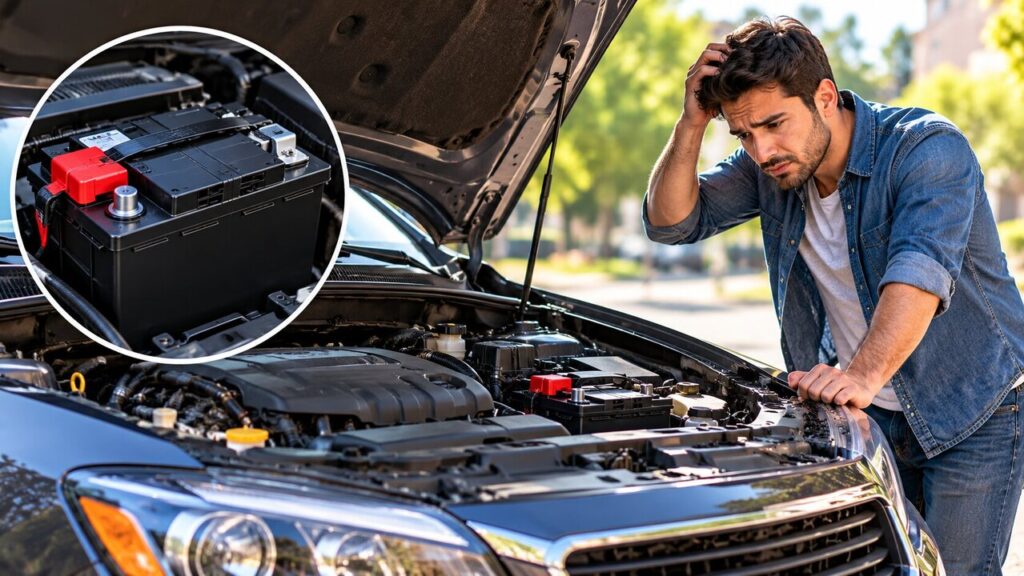
Replacing a car battery is one of the first things drivers consider when their vehicle refuses to start. However, what happens when you install a brand-new battery and the car still will not start? It can be frustrating, especially when you expect a new battery to solve the problem immediately.
The truth is that a car’s starting system depends on several components working together. The battery supplies electrical power, the starter motor turns the engine, the ignition system helps combustion begin, and the fuel system delivers the fuel needed to run the engine. If any of these components fails, your vehicle may refuse to start even with a fully charged battery.
Understanding the possible causes can help you identify the problem and avoid spending money replacing parts unnecessarily.
1. Loose or Corroded Battery Terminals
One of the most common reasons a car will not start after a battery replacement is a poor connection at the battery terminals.
Even a brand-new battery cannot supply power effectively if its terminals are loose, dirty, or covered in corrosion. During battery installation, a terminal clamp may not be tightened properly, preventing sufficient electrical current from reaching the starter motor.
You might notice clicking sounds when turning the key, flickering dashboard lights, or electrical accessories that work intermittently.
What you can do: With the engine switched off, visually inspect the battery connections for looseness or corrosion. Avoid touching exposed electrical connections with metal tools in a way that could bridge the terminals. If the connections appear damaged or you are unsure how to inspect them safely, ask a mechanic to check and secure them.
2. A Faulty Starter Motor
The starter motor is responsible for turning the engine when you start your vehicle. If it fails, the engine may not crank even when the battery is new and fully charged.
A faulty starter can produce a single click, repeated clicking, or no sound at all. In some cases, the dashboard lights work normally, but the engine does not turn over.
Starter motor problems can develop because of worn internal components, damaged electrical connections, or a failing starter solenoid.
What you can do: A mechanic can test the starter circuit, check the electrical connections, and determine whether the starter motor needs repair or replacement.
3. The Alternator Is Not Charging the Battery
A new battery does not guarantee that your vehicle’s charging system is working correctly. The alternator recharges the battery while the engine runs and supplies electrical power to the vehicle.
If the alternator is failing, the battery may gradually lose its charge. You could install a new battery, drive for a short period, and then discover that the car will not start again.
Common warning signs include a battery-shaped dashboard warning light, dim headlights, flickering electrical systems, and repeated starting problems.
What you can do: Have the battery, alternator, and charging circuit tested together. If the alternator is faulty, replacing the battery alone will not resolve the underlying issue.
4. A Damaged Starter Relay or Blown Fuse
Your car’s starting system includes electrical circuits, fuses, and relays that help deliver power to the starter motor.
A blown fuse, defective starter relay, or damaged wire can interrupt this process. As a result, the engine may not crank despite having a healthy battery.
Depending on the vehicle, you may hear nothing when turning the key, or the dashboard may appear normal while the starter remains inactive.
What you can do: Check your owner’s manual to identify the relevant fuse and relay locations. Never replace a fuse with one of a higher rating. If a replacement fuse blows again, have the circuit inspected to identify the underlying electrical fault.
5. A Faulty Ignition Switch
The ignition switch helps activate the electrical systems required to start the engine. If it becomes worn or develops an electrical fault, the vehicle may fail to respond when you turn the key or press the start button.
Possible symptoms include dashboard lights that do not illuminate properly, intermittent starting, or electrical accessories that stop working unexpectedly.
In some vehicles, the engine may crank but fail to start because the ignition switch is not supplying power to the necessary systems.
What you can do: A qualified technician can test the ignition switch and related circuits. Avoid repeatedly turning the key or pressing the start button if the system behaves unpredictably.
6. Fuel Pump or Fuel Delivery Problems
If your engine cranks normally but refuses to start, the problem may involve the fuel system rather than the battery.
The fuel pump delivers fuel from the tank to the engine. If the pump fails, a fuse blows, or the fuel supply becomes interrupted, the engine may not receive enough fuel to run.
Other possible causes include a clogged fuel filter, faulty fuel pump relay, or fuel pressure problems.
Some vehicles produce a brief humming sound from the fuel pump when the ignition is switched on, although this varies by model and system design.
What you can do: A mechanic can check fuel pressure, inspect relevant fuses and relays, and test the pump. Avoid opening fuel lines yourself because pressurized fuel presents a fire and injury risk.
7. Immobilizer or Key Recognition Issues
Modern vehicles often use an immobilizer system to prevent unauthorized starting. If the car does not recognize the key or key fob, it may prevent the engine from starting even when the battery is working perfectly.
You might see a security warning light, a key-shaped symbol, or a message indicating that the key is not detected.
A weak battery inside the key fob, a damaged transponder, or a problem with the vehicle’s key recognition system may be responsible.
What you can do: If your vehicle has a spare programmed key, try using it. For push-button-start vehicles, consult the owner’s manual for the emergency key-fob recognition procedure. If the problem continues, contact a qualified automotive technician or authorized dealer.
8. Engine Sensors or Ignition System Failure
Sometimes, the engine turns over but never actually starts because the engine management system cannot establish the conditions needed for combustion.
A faulty crankshaft position sensor, camshaft position sensor, ignition coil, or other essential component can interfere with ignition timing or fuel delivery.
A failed crankshaft position sensor, for example, may prevent the engine computer from detecting engine rotation correctly. This can stop the engine from starting even when the battery and starter motor are functioning.
What you can do: A diagnostic scan can help identify stored fault codes. A mechanic may also need to perform electrical tests because a fault code does not always prove that the named component itself has failed.
9. Incorrect Battery Size or Installation
Not every new battery is suitable for every vehicle. A replacement with the wrong specifications, insufficient starting capacity, or incompatible battery technology may cause starting difficulties.
Additionally, an improperly installed battery, damaged ground cable, or disconnected connection can prevent the electrical system from working correctly.
Some modern vehicles also require battery registration or coding after replacement, depending on their design and battery management system.
What you can do: Confirm that the replacement battery matches the vehicle manufacturer’s specifications. Have the installation, grounding connections, and any required battery registration checked.
What to Do When Your Car Still Will Not Start
Before replacing more parts, pay attention to what happens when you attempt to start the vehicle:
- Rapid clicking: A discharged battery, poor connection, or electrical supply problem may be responsible.
- One click with no engine movement: The starter motor, solenoid, cables, or engine may require inspection.
- Dashboard lights but no response: Consider the starter circuit, ignition switch, immobilizer, or safety interlock.
- Engine cranks but does not start: Fuel delivery, ignition, engine sensors, or immobilizer problems are possible.
- Car starts but repeatedly loses battery power: The alternator, wiring, parasitic electrical drain, or battery condition should be tested.
These symptoms provide useful clues but are not definitive diagnoses.
Final Thoughts
If your car has a new battery but still will not start, do not assume the replacement was a waste of money. The real problem may be a faulty starter motor, damaged battery connection, failing alternator, fuel delivery issue, ignition fault, or immobilizer problem.
Start by checking the battery installation and connections, then have the starting and charging systems tested before purchasing additional parts.
If you notice smoke, a burning smell, damaged battery cables, or signs of battery leakage, stop attempting to start the vehicle and seek professional assistance. A systematic diagnosis can save money, prevent unnecessary repairs, and help get your car back on the road safely.
